


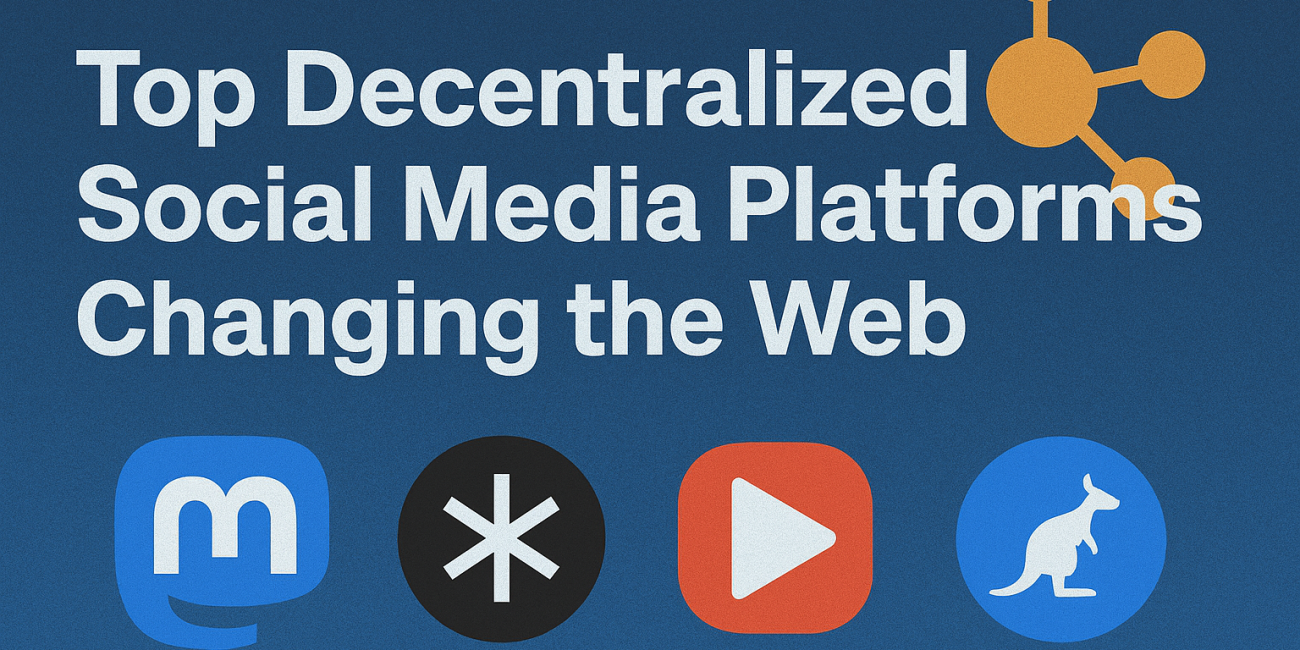
In today’s hyper-connected digital world, social media giants control the narrative. From content moderation to data privacy, users often feel powerless on centralized platforms. This concern has given rise to a bold new wave of decentralized social media platforms designed to give users control over their data, content, and online interactions.
At Absent Tech, we dive into the heart of digital disruption. This guide explores the most promising decentralized platforms that are reshaping online communication and paving the way for a freer, more open internet experience.
Mastodon – The Open-Source Twitter Alternative
Mastodon is a federated microblogging platform that mimics Twitter but without centralized ownership. It runs on independent servers, called instances, each managed by individual communities. You can choose or even host your own server with your rules.
What makes Mastodon unique is its decentralization and community-focused approach. It’s ideal for users who seek free expression without ads or algorithmic manipulation.
Minds – Crypto Rewards for Social Engagement
Minds combines social networking with blockchain principles. Users are rewarded with Minds Tokens for contributing content, interacting with others, or referring friends. These tokens can be used to boost posts or support creators.
This platform emphasizes transparency, free speech, and open-source ethics. Minds is a popular choice among content creators, journalists, and free-thinkers.
Nostr – A Protocol, Not Just a Platform
Nostr (Notes and Other Stuff Transmitted by Relays) is a protocol for building decentralized social networks. It’s not a standalone app but a foundation upon which developers can build censorship-resistant platforms.
With its minimal infrastructure and cryptographic keys, Nostr offers a peer-to-peer experience. Elon Musk and Jack Dorsey have both shown interest, giving it significant visibility in the Web3 space.
Steemit – Blogging on the Blockchain
Steemit is a blockchain-based blogging and social networking site where users earn STEEM tokens for publishing and curating content. It incentivizes high-quality content and active participation.
Unlike traditional platforms, Steemit’s reward system makes it a financial asset as well as a social experience. It’s especially attractive to writers, thinkers, and entrepreneurs.
Akasha – Where Ethereum Meets Expression
Built on Ethereum, Akasha is a decentralized publishing network focusing on digital identity and free expression. It leverages the Ethereum blockchain and IPFS (InterPlanetary File System) to store content in a censorship-resistant way.
Akasha is more than a social platform—it’s a movement to preserve intellectual freedom in the digital age. It’s ideal for deep thinkers and creatives.
DTube – The Decentralized YouTube Alternative
DTube is a decentralized video sharing platform that operates without ads, central servers, or tracking. It uses blockchain technology and IPFS for secure, censorship-free video hosting.
Content creators on DTube are rewarded with cryptocurrency instead of relying on advertising revenue. It’s a promising platform for vloggers, educators, and filmmakers seeking autonomy.
Peepeth – Ethical Social Networking on Blockchain
Peepeth is a Twitter-style microblogging site built on the Ethereum blockchain. It promotes thoughtful content by slowing down the pace of interaction, removing likes and retweets, and encouraging reflection.
Peepeth’s focus is on meaningful engagement, environmental consciousness, and digital integrity. It’s a platform for those who value quality over virality.
Diaspora – Privacy First, Always
Diaspora is one of the earliest decentralized networks. It operates on independently hosted pods, where users own their data and decide how it’s shared. No advertising, no tracking, just community.
Diaspora lets users connect across pods while keeping control over their online identity. It’s built around four principles: decentralization, freedom, privacy, and user control.
Taskon – Web3 for Collaborative Projects
Taskon isn’t your typical social network—it’s a decentralized collaboration tool powered by Web3. It allows teams to create, share, and complete tasks on a trustless platform.
Users can reward each other in tokens and manage workflows with transparency. Taskon bridges social networking with productivity, making it ideal for DAOs, startups, and freelancers.
Future of Decentralized Social Media
The future of decentralized social media platforms lies in interoperability, user ownership, and transparency. As data privacy concerns rise, more users will migrate to platforms that value ethical engagement over profits.
Technologies like blockchain, IPFS, and zero-knowledge proofs will continue to empower these platforms. Expect to see deeper integrations with NFTs, decentralized identity, and token economies. Social media is no longer just about connecting—it’s about reclaiming digital freedom.
FAQs
What are decentralized social media platforms?
They are platforms not owned or controlled by a central authority, allowing users to own their data and participate in open, censorship-free communication.
Are decentralized platforms safe to use?
Yes, many use blockchain and encryption to protect user data. However, users should understand each platform’s policies and technical features.
Can I earn money on decentralized platforms?
Yes, platforms like Steemit, DTube, and Minds reward users with cryptocurrency for content creation and engagement.
Do I need crypto knowledge to use these platforms?
Basic knowledge helps, especially for platforms built on blockchain. However, many offer beginner-friendly onboarding.
Will decentralized social media replace Facebook or Twitter?
While unlikely in the short term, they offer a growing alternative for users prioritizing privacy, freedom, and transparency.
Conclusion
The rise of decentralized social media platforms marks a paradigm shift in how we connect, share, and express online. From Mastodon’s federated communities to Steemit’s rewarding blog ecosystem, these platforms challenge the status quo and empower users. At Absent Tech, we believe the future of digital interaction belongs to platforms that prioritize people over profits, transparency over tracking, and freedom over control.
Whether you’re a content creator, privacy advocate, or tech enthusiast, now is the perfect time to explore decentralized alternatives and be part of a more open internet.

Other Articles

Canva Tool Guide: Design Anything with Ease in 2025
Digital Twins in Manufacturing: Transforming Industries Now


No Comment! Be the first one.